
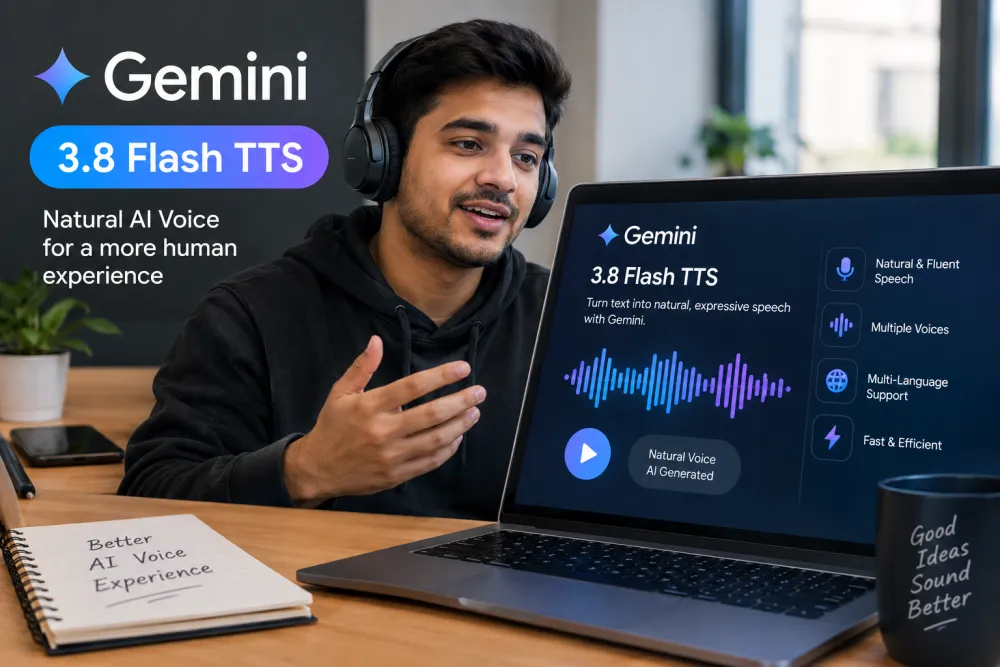
Google has introduced Gemini 3.8 Flash TTS, a new text-to-speech AI model designed to create more expressive and customizable voices from text prompts.
Unlike traditional text-to-speech tools that mainly let you choose from a fixed list of voices, Gemini 3.8 Flash TTS allows developers and creators to describe the type of voice and performance they want.
Google says the model can be used for character voices, podcasts, audiobooks, voice agents, dubbing and other audio experiences.The model started rolling out on September 23, 2026, through Google AI Studio and the Gemini API.
In this guide, we'll explain what Gemini 3.8 Flash TTS is, its main features, voice customization, voice replication, supported languages, availability and how you can try it.
What Is Gemini 3.8 Flash TTS?
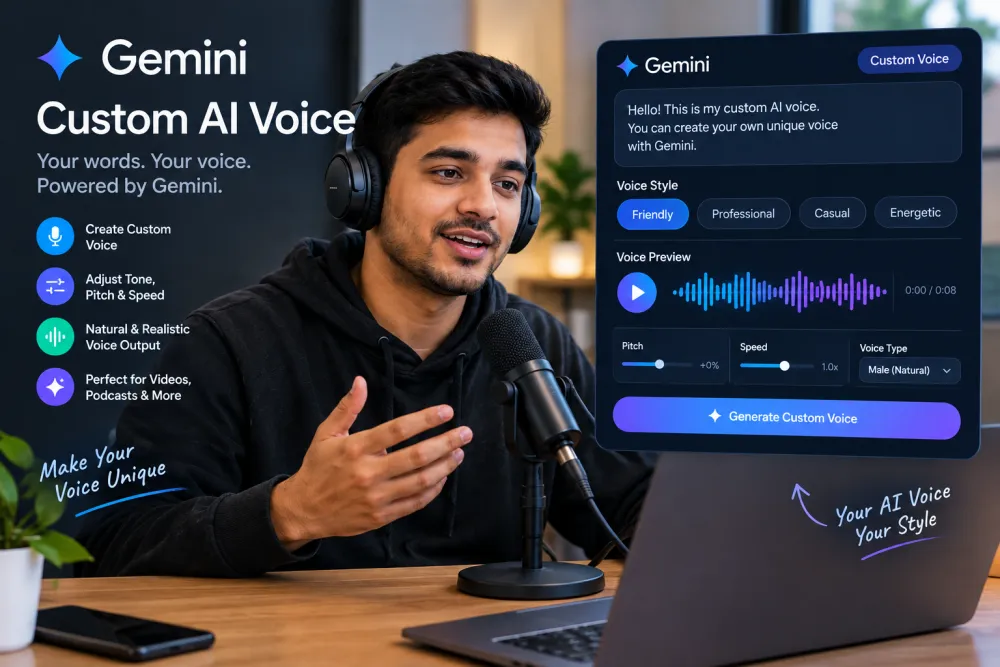
Gemini 3.8 Flash TTSis Google's latest text-to-speech model for generating expressive spoken audio from text.
TTS stands for Text-to-Speech :
In simple terms, you provide written text and the AI converts it into spoken audio.
What makes the new Gemini model different is the amount of control available over the performance.
Google says users can describe characteristics such as the role, accent and voice style using natural-language prompts.
For example, instead of simply selecting "male voice" or "female voice," a creator could describe a voice as:
A calm documentary narrator with a warm tone and slightly slower pacing.
The system can then use that description to generate a suitable voice.Google says Gemini 3.8 Flash TTS supports voice design across more than 100 languages and dialects.
Here are some of the most important features announced by Google.
1. Create Custom AI Voices
One of the biggest features is generative voice design.
Instead of relying only on predefined voices, users can describe the characteristics of a voice using natural language.
You can specify things such as:
1. Character or role
2. Accent
3. Tone
4.Speaking style
5. Emotional delivery
6.Pacing
This could be useful for creating voices for games, videos, podcasts, educational content and fictional characters.
2. Voice Replication
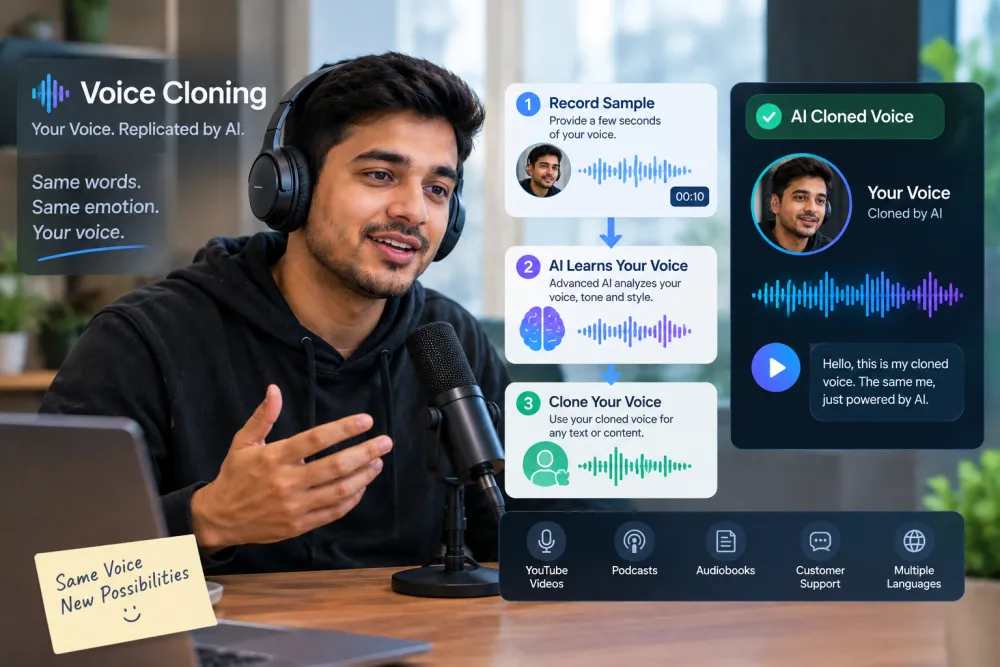
Gemini 3.8 Flash TTS also introduces voice replication capabilities through Google AI Studio.
This allows a voice to be recreated from an audio sample, subject to Google's availability and safety restrictions.
However, there is an important limitation:
voice replication through AI Studio is currently not available in Illinois, Texas, the EEA, UK, Switzerland and India, according to Google's announcement.
So availability of this particular feature depends on your location.
3. Line-by-Line Performance Control
Gemini 3.8 Flash TTS is not limited to reading text in a neutral voice.
Google says creators can provide performance instructions for individual lines.
For example, a script can contain directions for:
1. Speaking slowly
2. Whispering
3. Sounding excited
4. Pausing between sentences
5. Changing emotional tone
6. Adding conversational reactions
This makes the model particularly interesting for storytelling and character-based audio.
4. Two-Speaker Conversations
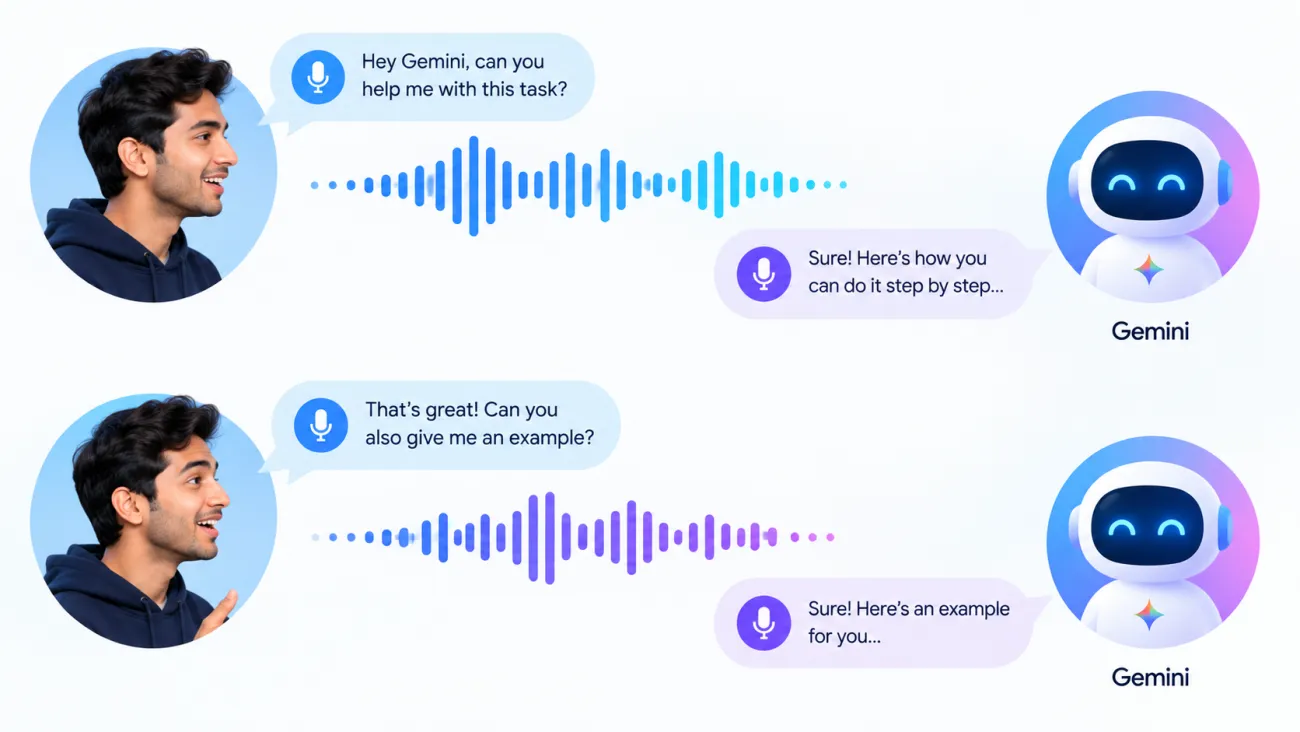
Another useful capability is native two-speaker scene staging.
You can create a script containing two speakers and generate a conversation while keeping their voices distinct.
This can be useful for:
1. Podcasts
2. Dialogue scenes
3.Training content
4. Educational conversations
5. Audio dramas
6. Interactive applications
Google says the model can maintain natural conversational turn-taking between speakers.
5. Long-Form Audio
Gemini 3.8 Flash TTS is also designed for longer audio generation.
Google says the model can maintain voice quality, pacing and character timbre across hours of continuous audio with minimal speaker drift.
This makes long-form applications such as audiobooks and podcasts an important use case.
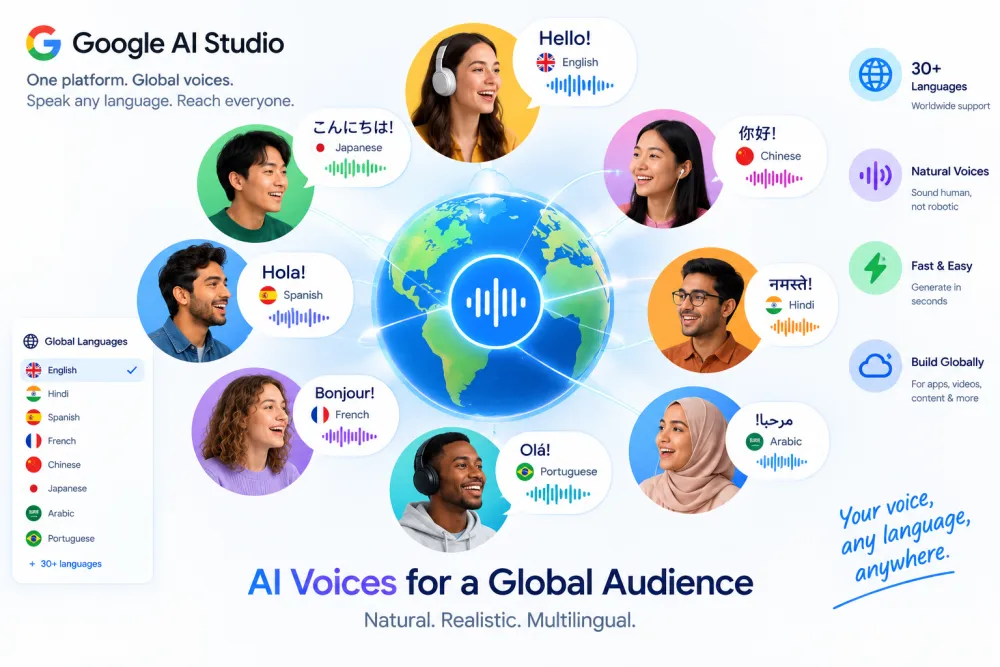
6. More Than 100 Languages and Dialects
Google says Gemini 3.8 Flash TTS supports more than 100 languages and dialects.
The company also highlighted performance across languages including Japanese, Brazilian Portuguese, Vietnamese, Modern Standard Arabic, Mexican Spanish and Hindi.
This multilingual capability makes the model relevant for creators targeting audiences in different countries.
Gemini 3.8 Flash TTS vs Gemini 3.8 Flash-Lite TTS
Google launched two related models at the same time.
Feature
Gemini 3.8 Flash TTS
Gemini 3.8 Flash-Lite TTS
Main purpose
Creative voice generation
High-volume audio generation
Voice design
Yes
Yes
Expressive control
Advanced
Expressive
Long-form content
Designed for it
Designed for scale
Best suited for
Characters, podcasts, storytelling
Dubbing, content generation, voice agents
Availability
Gemini API, AI Studio
Gemini API, AI Studio
Google describes Flash TTS as the model focused on deeper creative direction and character design, while Flash-Lite TTS is designed for high-volume, cost-efficient audio generation.
How to Use Gemini 3.8 Flash TTS
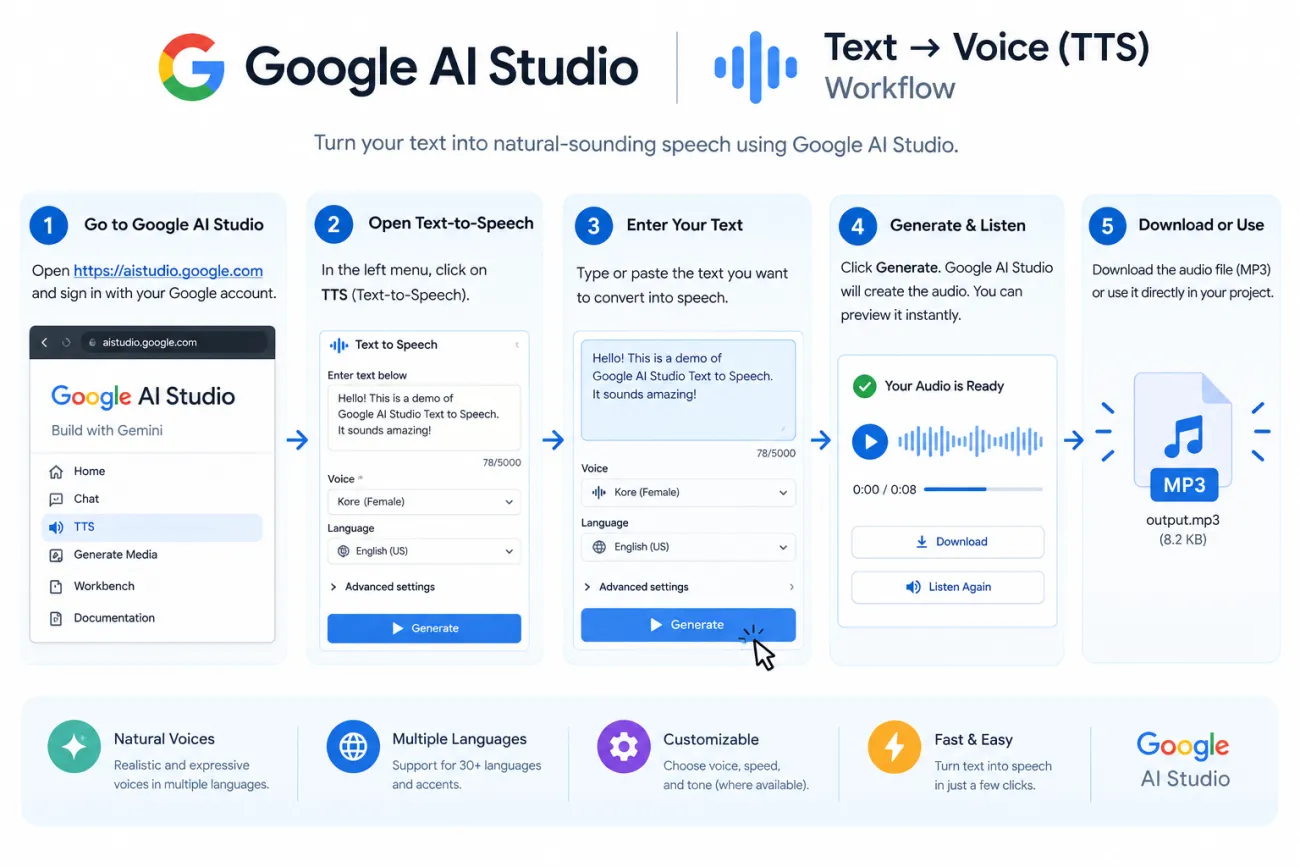
The easiest route for developers and people experimenting with the model is through Google AI Studio.
Step 1: Open Google AI Studio
Go to Google's AI Studio and sign in with your Google account.
Look for the available Gemini audio/text-to-speech models.
Step 2: Select the Gemini TTS Model
Choose Gemini 3.8 Flash TTS when it is available in your account and region.
Availability can change during a rollout, so users may not all see exactly the same options at the same time.
Step 3: Prepare Your Script
Write the text you want the model to speak.
For example:
Narrator:
"Welcome to our guide to the latest AI voice technology."
You can also provide performance instructions describing how the line should sound.
Step 4: Add Voice Direction
Instead of simply entering text, describe the desired performance.
For example:
Voice direction:
"Speak like a friendly technology presenter. Use a natural conversational tone, medium pacing and slight excitement when introducing new features.
"This gives the model more context about how the speech should be performed.
Step 5: Generate the Audio
Generate the speech and listen to the result.
If the delivery does not sound right, adjust your voice direction or script and generate another version.
This iterative approach can be useful when creating narration, dialogue or character voices.
Can Gemini 3.8 Flash TTS Clone Any Voice?
It can support voice replication, but it should not be treated as a tool for copying anyone's voice without permission.
Google provides safety restrictions around the feature, and its availability is currently limited in several locations.
If you are using a real person's voice, make sure you have the appropriate permission to use and replicate that voice.
For creators, the safer approach is often to create an original AI voice rather than attempting to imitate a real person.
Gemini 3.8 Flash TTS Use Cases
The model could be useful across several different industries and creator workflows.
Creators can use expressive AI narration for:
1. Educational videos
2. Explainer videos
3. Documentary-style content
4. ShortsTutorials
Podcasts
The two-speaker capability can be useful for creating dialogue-based podcast content and scripted conversations.
Audiobooks
Long-form speech generation and control over pacing can make the model useful for audiobook production.
Gaming
Game developers can create character voices and scripted dialogue for interactive experiences.
AI Voice Agents
Developers can integrate generated speech into conversational applications and voice agents through the Gemini API.
Google says platforms including Agora, LiveKit, Pipecat and Vercel are working with its Gemini audio models for voice experiences.
Dubbing and Localization
Multilingual support can also make the technology useful for adapting audio content for international audiences.
Is Gemini 3.8 Flash TTS Free?
The answer depends on how you access the model and which Google service you use.
Gemini 3.8 Flash TTS is rolling out through the Gemini API and Google AI Studio for developers.
Google has also announced availability through Gemini Notebook for general users.
API usage can be subject to Google's pricing and usage limits, so users should check the current official Gemini API pricing before building a production application.
Important:
Pricing and quotas can change as the model moves through its rollout.
Where Is Gemini 3.8 Flash TTS Available?
Google announced the model for:
1. Gemini API
2. Google AI Studio
3. Gemini Notebook
Enterprise API availability is listed as coming soon through Gemini Enterprise.
However, individual features may have different regional restrictions.
For example,
Google specifically states that voice replication through AI Studio is not currently available in India, the UK, EEA, Switzerland, Illinois and Texas.
That does not necessarily mean every Gemini 3.8 Flash TTS capability is unavailable in those locations.
Gemini 3.8 Flash TTS for Developers
Developers can access the model through the Gemini API and use generated speech in applications.
Potential applications include:
1. AI tutors
2. Customer-service agents
3. Virtual assistants
4. Voice-based applications
5. Interactive games
6. Accessibility tools
7. Content-generation platforms
Google says the models are designed to support high-quality audio experiences at scale.
Gemini 3.8 Flash TTS vs Traditional AI Voice Generators
Traditional AI voice generators often work around a library of predefined voices.
Gemini 3.8 Flash TTS takes a more flexible approach by allowing users to describe the desired voice and performance.
The biggest differences are:
Traditional approach:
Select an existing voice Enter tex tGenerate audio Gemini 3.8
Flash TTS approach:
Describe the voice Describe the performance Provide the script Generate and refine the resultThis makes it particularly interesting for content where character, emotion and performance matter as much as speech accuracy.
What Makes Gemini 3.8 Flash TTS Different?
The biggest change is not simply that Google has released another text-to-speech model.
The interesting part is the shift from voice selection to voice direction.
Instead of asking only: "Which voice should read this?" creators can increasingly describe: "How should this character sound and perform this scene?" That distinction could be important for storytelling, games, podcasts, video production and interactive voice applications.
Google also reports strong results on its cited voice benchmarks, including Hume AI's Voice Design Benchmark and Overall Quality Index. These are Google's reported evaluation results rather than an independent conclusion about the model's overall quality.
Gemini 3.8 Flash TTS is an important update for AI-generated speech because it gives creators more control over voice design and performance.
Its ability to create custom voices, direct speech line by line, generate two-speaker conversations and support more than 100 languages makes it relevant to creators and developers worldwide.For developers, Google AI Studio and the Gemini API provide the main starting points.
For creators, the most interesting possibilities are likely to be character voices, narration, podcasts, dubbing and interactive audio.
The technology is still new, so availability, pricing and feature access can change as Google's rollout continues.If you want to experiment with it, check Google's official documentation and AI Studio first rather than relying on third-party tools or outdated tutorials.
Frequently Asked Questions
What is Gemini 3.8 Flash TTS?
Gemini 3.8 Flash TTS is Google's new text-to-speech model for creating expressive and customizable AI-generated speech.
When was Gemini 3.8 Flash TTS released?
Google announced Gemini 3.8 Flash TTS on September 23, 2026.
Can Gemini 3.8 Flash TTS create custom voices?
Yes. Google says users can design voices using natural-language prompts, including characteristics such as role, accent and voice style.
Does Gemini 3.8 Flash TTS support multiple speakers?
Yes. Google says it supports native two-speaker scene staging with distinct voices and natural turn-taking.
How many languages does Gemini 3.8 Flash TTS support?
Google says the model supports more than 100 languages and dialects.
Can I use Gemini 3.8 Flash TTS in Google AI Studio?
Google has announced rollout through Google AI Studio and the Gemini API.
Availability can depend on account and regional rollout.
Is voice replication available everywhere?
No. Google currently lists regional restrictions for voice replication through AI Studio, including India, the UK, EEA, Switzerland, Illinois and Texas.
Is Gemini 3.8 Flash TTS free?
Access and pricing depend on the Google product and usage method. Developers should check Google's current Gemini API pricing and limits before using it in production.
Pingback: Gemini 4 Argon: Features, Pricing, Release Date & How to Use It in 2026